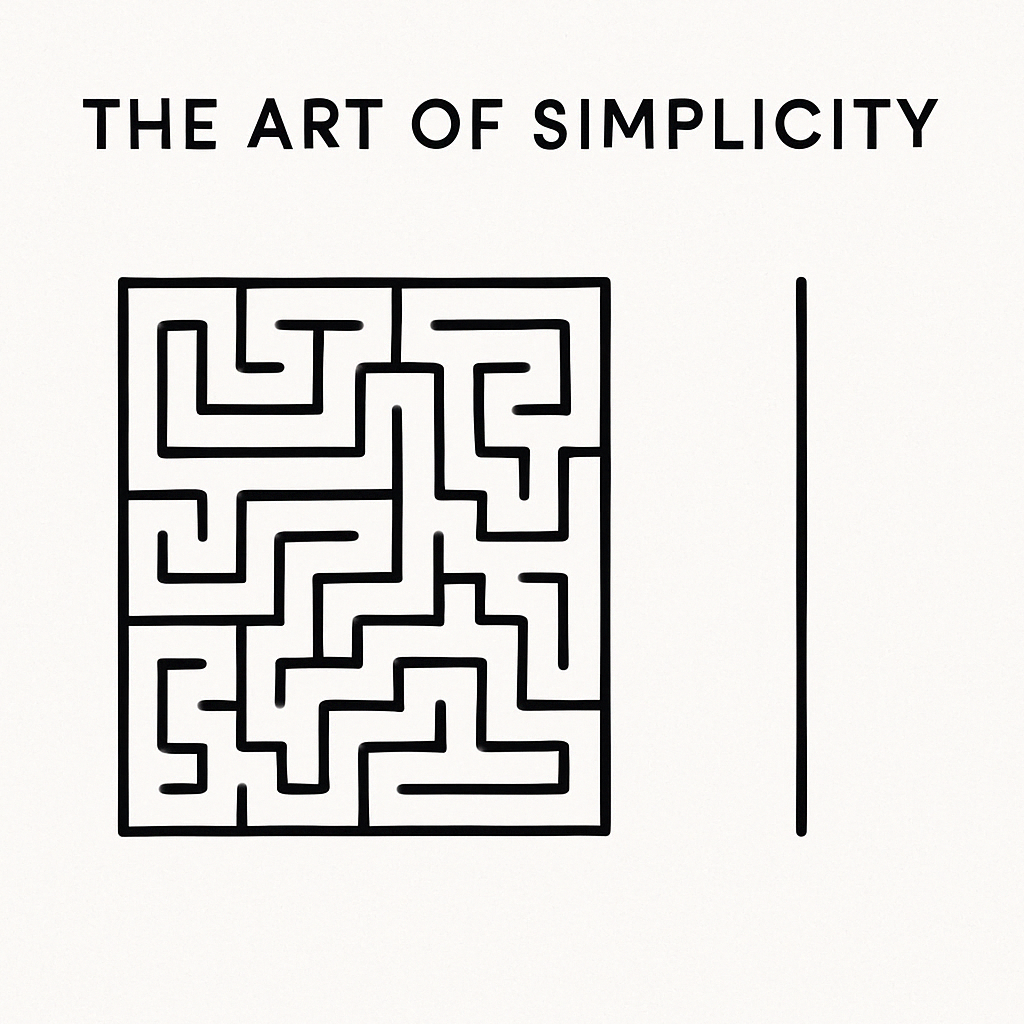

We live in an age of information overload but structural uncertainty. Data is everywhere, but the ability to prove it is scarce. Trust is collapsing not because societies have become cynical, but because the systems that produce “truth” were not designed for control, reproduction, and adjudication. This article argues that trust is not a cultural issue — it is an infrastructure problem.
Chapter 1 — The Collapse of Common Reality
Modern societies rely on a silent assumption: that disagreements can, ultimately, be resolved by referring to commonly accepted facts. This assumption held true for decades because facts were rare, their production was institutionally controlled, and the mechanisms of their creation were generally understood. Today, none of these conditions apply. Information is abundant and data is everywhere, but agreement on what is real is becoming increasingly difficult. This is not because societies became irrational, but because the shared frame of reference for truth has fragmented. The digital age did not create a shortage of information; it created a shortage of proof. Modern systems produce results with great ease but fail to maintain the path that leads to them. Thus, numbers circulate without their evidentiary background and lose their power to resolve disputes. When proof is inaccessible, disagreement leads not to inquiry but to polarization. Without a common mechanism for adjudicating truth, every narrative becomes defensible and none refutable. The resulting instability is not a cultural pathology, but an emergent property of a system that cannot prove what is the case.
Chapter 2 — Trust is Not a Cultural Issue, but a Structural One
The loss of trust is often attributed to cultural or social causes. This diagnosis is convenient because it shifts responsibility from systems to citizens. However, trust is not a moral virtue; it is a behavior resulting from experience. People trust systems when they can understand how they work, predict their results, and see that errors are corrected in a visible and documented way. When these are absent, distrust is not a pathology but a rational reaction. Culture does not precede systems; it follows their structure. When systems do not allow for audit, no communication strategy can produce trust; it can only demand it. In modern digital governance, authority has shifted from the person to the system. When this systemic authority is not accompanied by a provable process, it becomes immune to audit. And what is not audited is not trusted.
Chapter 3 — How Modern Institutional Systems Produce “Truth”
In modern institutional systems, truth is not discovered; it is produced. It is produced through data flows, rules, transformations, and automated processes. The problem is not the production itself, but its invisibility. Between a fact and the final number, a chain of choices and interpretations intervenes. When this chain is not visible, the number appears as a natural fact rather than an institutional construction. The dominant declaration-centric model functionally turns a statement into truth. The silent transition from the provisional to the final occurs without social audit, while statistics function as a mechanism of interpretation rather than simple measurement. As long as presentation replaces proof, truth is disconnected from responsibility. No one is lying, but no one can fully prove what is the case. Systems are designed to produce results, not to adjudicate truth.
Chapter 4 — The Single Point of Truth as Institutional Infrastructure
The term “Single Point of Truth” (SPoT) is often used in a technical way, referring to a central database or an “authoritative” system. This perception is incomplete. Centrality alone does not produce truth; it produces power. A real SPoT is not defined by where data is concentrated, but by how disputes around it are resolved. It is not the point where “truth is stored,” but the point where conflicting claims can be checked, deviations explained, and corrections documented. Most systems describing themselves as SPoTs fail because they confuse consolidation with proof. They consolidate data but do not maintain full traceability, history of changes, or reproducibility. The result is a monolithic point of assertion, not truth. In practice, institutions operate with multiple sources and versions of reality. A mature SPoT does not eliminate these deviations. It records them, categorizes them, and makes them auditable. Consolidation without traces produces artificial certainty. The more accurate restatement is this: Single Point of Truth does not mean Single Source of Data, but Single Proof of Truth. That is, a commonly accepted chain of evidence from fact to result. A mature institutional SPoT does not require faith in the organization. It exposes the process, accepts challenge, and allows for audit. Challenge is not a threat, but a functional requirement. Finally, the SPoT is not a project or an application; it is institutional infrastructure. It requires legal recognition of traceability, acceptance of plurality, and mechanisms for official adjudication. Without these, any technical implementation remains fragile.
Chapter 5 — Levels of Trust
Trust is not binary; it is not either present or absent. It scales according to the context and the significance of the decision. Citizens do not demand the same level of trust for a statistic of interest as they do for a decision affecting rights or lives. Trust does not precede the operation of a system; it arises from it. Each level of trust corresponds to a specific way of producing truth and a specific degree of proof. When this correspondence is absent, trust turns into an arbitrary demand. At the lowest level, “implied trust,” truth is declared and authority is not questioned. This model is no longer sustainable. In “declarative trust,” the statement functions as de facto truth, and audit is periodic and after-the-fact. This remains the dominant model in public administration, with all the known risks of error escalation. “Verifiable trust” introduces institutional cross-referencing and turns disagreement into a technical issue. It is the minimum acceptable level for serious public decisions. “Provable trust” goes one step further: every result is accompanied by history, traceability, and reproducibility. Here, trust is not requested; it is produced. At the highest level, “continuous trust,” verification is not momentary but embedded in the flow. Deviations are detected early and crises are prevented rather than managed after-the-fact. This level is necessary for AI-driven systems and large-scale automation. The critical axiom is simple: a high level of trust cannot be requested when the system provides a low level of proof. The architectural inconsistency between levels of trust and actual capabilities is a basic cause of institutional distrust.
Chapter 6 — Levels of Traceability
Traceability is not a perception or a feeling; it is a property of the system. It either exists or it doesn’t. Without it, verification is impossible and trust is necessarily subjective. Traceability does not just mean knowing the source. It means the ability to reconstruct the result from primary facts through known and repeatable steps. If this is not possible, traceability is superficial. At the lowest level, all paths are absent; numbers appear without origin and are not subject to audit. At the next level, we know the source but not the process. Responsibility is limited and verification remains partial. “Process traceability” makes decisions explainable but not always fully reproducible. Full “lineage traceability” allows for a return from the result to the facts, making disagreement technically resolvable. At the highest level, “verifiable traceability,” the chain of proof can be audited independently and does not require trust in the organization. Only at this level can large-scale social trust exist. The most frequent institutional error is a mismatch: requesting a high level of trust while providing a low level of traceability. This is not a technical problem, but an institutional inconsistency. In the digital age, traceability is not a good practice; it is a prerequisite for legitimacy. When citizens are affected by decisions, they have a right not only to the result, but to the path that led to it
Chapter 7 — Why Regulation Fails Without Verifiability
Regulation is often treated as a mechanism for controlling reality. In practice, it functions as a mechanism for defining responsibility. Laws determine what is permitted and who is accountable, but they rarely incorporate how what happened is proven. When proof is not an inherent feature of the system, regulation necessarily relies on declarations, periodic audits, and evidence of compliance. This turns compliance into a ritual: it confirms that processes were followed, not that the result is true. Regulation is usually applied as an external layer: the system is designed, put into operation, and then compliance is “snapped on”. The regulator observes results without access to the core production of truth. Thus, they do not adjudicate reality; they simply certify behaviors. Under conditions of opacity, regulation shifts conflict rather than reducing it. Disagreements are not resolved with data but with prestige, interpretation, and power. Detailed legislation creates the illusion of control without addressing the structural problem. Artificial intelligence does not reveal the weakness of regulation; it accelerates it. In automated systems, regulation that operates after-the-fact is necessarily inadequate. Without provenance, lineage, and reproducibility, audit becomes reactive and often late. The transition required is clear: from the regulation of behavior to the regulation of proof. When verifiability is integrated into design, compliance ceases to be a burden and becomes a natural property of the system.
Chapter 8 — Architectural Patterns for Verifiable Truth
Trust and verifiability do not arise from intention; they are designed. The architectural patterns described here are not technological solutions, but structural choices that make proof an inherent characteristic. The recording of events constitutes the foundation. Events are recorded once and are not silently modified. Every correction is a new event, not a retrospective change. Without this principle, every subsequent proof is fragile. Explicit distinction of roles and actors prevents the diffusion of responsibility. Every act is linked to an identity, role, and authority, whether it concerns a person, system, or automated mechanism. Responsibility cannot be abstract. The distinction between validation and verification prevents the turning of statements into truths. Correct format does not equate to true content. Verification requires cross-referencing, temporal consistency, and logical coherence. Data transformations must be transparent, versioned, and reproducible. Every transformation constitutes an interpretation and, as such, must leave a trace. Without lineage, results are unauditable. The coexistence of multiple sources and reconciliation mechanisms recognizes that deviation is normal. The system does not silently choose a winner; it records and makes deviations auditable. Temporal integrity ensures that the past is not rewritten. Finally, every result must explicitly state its level of trust and traceability. Silence is equivalent to deception. A system is considered institutionally verifiable not when it is perfect, but when it does not erase events, does not confuse statement and truth, and allows for reproduction.
Chapter 9 — Artificial Intelligence as a Stress Test of Institutional Truth
Artificial intelligence does not introduce new institutional weaknesses. It reveals and accelerates them. What functioned marginally on a human scale collapses when automated. In AI-driven systems, human judgment is replaced by mechanical consistency. If the background is incorrect or opaque, the error is not corrected; it is systematized. AI does not forgive unclear data or non-traceable processes. AI introduces a new form of authority: the automated one. Decisions appear objective because they do not seem human. The less understandable the process, the stronger its authority appears. Without proof, this authority becomes immune to audit. The critical issue is not the decision, but its origin. Without data provenance, decision lineage, model versions, and temporal correlation, no AI decision can be substantially explained or challenged. The discussion about “explainable AI” fails when limited to the model. No AI is explainable if the reality upon which it operates is not traceable. Explaining algorithms without explaining data is a technical diversion. AI functions as a stress test of institutional maturity. In mature systems, it reinforces consistency. In immature ones, it solidifies errors and accelerates distrust. The problem is not the AI, but the absence of truth infrastructure.
Chapter 10 — From Transparency to Proof
Transparency has been elevated to a universal answer to the crisis of trust. Open data, published methodologies, and accessible dashboards are presented as sufficient legitimacy mechanisms. In practice, they are not. Transparency shows; it does not prove. Access to data presupposes interpretation. When data is detached from its production context, transformations are invisible, and corrections are silent, transparency fails to resolve disagreements. It produces information, not certainty. Providing open data is often confused with verifiability. However, data without provenance, lineage, and temporal consistency is simply exposed. It is not auditable. Proof is not a piece of evidence or a file, but a process that can be repeated and lead to the same result. Reproducibility is not a technical luxury. When decisions produce rights or obligations, it is an institutional requirement. Without the possibility of reproduction, trust cannot be produced; only requested. Proof works inversely to transparency. It does not call upon the citizen to believe, but to audit. When it is available, disagreements turn into technical questions and tension de-escalates. When it is absent, every disagreement becomes political. In the age of AI, proof is the only barrier to automated authority. Without it, transparency turns into a theatrical act: it shows results but hides the path that produced them.
Chapter 11 — The Cost of Inaction
The non-adoption of verifiable systems of truth is often presented as a neutral choice. In reality, it constitutes an active choice to maintain risk. Inaction does not maintain stability; it accumulates instability. Institutional legitimacy does not collapse suddenly. It erodes gradually, every time a result cannot be explained or reproduced. The critical point is not the first failure, but the point where no success convinces anymore. When verification is systematically absent, distrust is normalized. Citizens do not expect proof or correction. They adapt to permanent uncertainty and withdraw from participation. Society operates without a common reality. Without proof mechanisms, disagreement is not resolved. It turns into a clash of narratives and political confrontation. Misinformation thrives not because it is persuasive, but because there is no institutional way to refute it. The cost is also economic. Multiple audits, conflicting datasets, decision delays, and increased bureaucracy consume resources without improving the quality of truth. Institutions become rigid, protecting the process instead of correcting their operation. In times of crisis, the absence of verifiable truth proves catastrophic. The crisis does not create the collapse; it reveals it. And without a common reality, collective planning for the future becomes impossible.
Chapter 12 — A New Social Contract for Truth
Every social contract presupposes a commonly accepted reality. In the digital age, this prerequisite can no longer be taken for granted. The way truth is produced does not correspond to the scale, speed, and complexity of modern society. The new social contract for truth cannot be based on trust as a prerequisite. It must be based on proof as a possibility. Not for everyone to prove everything, but for everyone to be able, if they wish, to audit how what affects them arose. Truth must be treated as public infrastructure. Like roads or energy networks, it requires design, resilience, and institutional maintenance. It cannot be a side product of internal processes or communication narratives. Such a contract creates symmetric rights and obligations. Citizens gain the right to know the origin of decisions and the possibility of verification. Institutions undertake the obligation of traceability, visible correction, and adjudication of disputes with data. Challenge ceases to be considered a threat. It becomes an institutional mechanism for improvement. Systems that withstand audit are not weakened; they are strengthened. Truth is disconnected from power and reconnected with process. The stake is not technological, but constitutional. A society without verifiable truth cannot govern itself. The transition from trust to proof, from authority to process, and from transparency to verifiability is not a choice of progress. It is a prerequisite for stability. Truth, in the digital age, cannot be a promise. It must be infrastructure.
This article forms the conceptual framework of a broader project around verifiable truth in the digital age. The full White Paper “Trust Is an Infrastructure Problem”, with structured frameworks, architectural patterns and institutional extensions, will soon be available for download to subscribers.